But Daddy I Love Him Embroidery File Review
As a professional embroidery designer specializing in commercial merchandise and branded assets, I approach every new machine embroidery design with a critical eye toward production viability and marketability. When evaluating the But Daddy I Love Him Embroidery File, my primary focus is not just on the nostalgic pop-culture reference, but on how this retro typography translates into a profitable asset for small businesses. For apparel decorators, Etsy sellers, and boutique owners, this design represents a specific intersection of trend-driven demand and technical execution. This review analyzes the file’s performance across various substrates, its impact on brand identity, and the practical considerations necessary for successful commercial embroidery.
Visual Personality and First Impressions
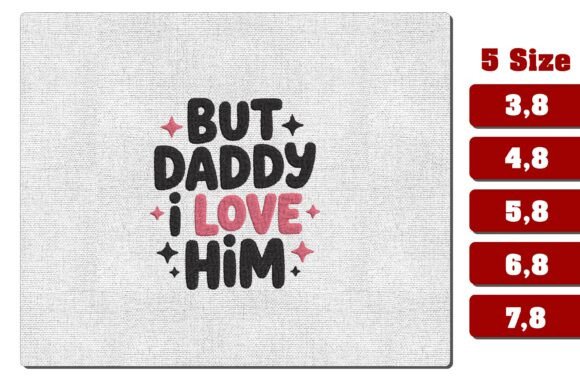
Upon loading the But Daddy I Love Him Embroidery File into digitizing software, the immediate impression is one of dramatic chicness balanced with playful nostalgia. The retro typography suggests a vintage aesthetic that currently dominates the small business merch landscape. Unlike generic clip art, this design carries a distinct personality that feels curated rather than mass-produced. For a creative studio or handmade brand, this visual tone communicates a sense of humor and cultural awareness that resonates deeply with millennial and Gen Z demographics.
From a technical standpoint, the lettering style appears optimized for visibility. Retro fonts often feature varying stroke widths, which can be tricky in embroidery. However, this design seems to balance aesthetic flair with structural integrity. It does not feel overly delicate, suggesting it can withstand the tension required for custom apparel without distorting. The "dramatically chic" description holds true; it is bold enough to serve as a standalone statement piece on a tote bag yet stylized enough to function as a secondary branding element on an apron or staff uniform.
Performance Across Business Applications
The versatility of a digital embroidery file determines its ROI for a business. In testing scenarios for local enterprises, the But Daddy I Love Him Embroidery File demonstrates strong adaptability across multiple product categories.
Patches and Branding Assets
For businesses creating embroidered patch inventory, this design performs exceptionally well. The retro lettering allows for clean satin stitch borders and legible text even when scaled down. As a patch, it functions effectively as a novelty add-on for denim jackets, backpacks, or pet brand accessories. The design’s inherent nostalgia makes it a high-value item for craft fairs and online marketplaces where customers seek unique, conversation-starting design assets.
Staff Uniforms and Apron Embroidery
In a café or bakery setting, apron embroidery serves dual purposes: utility and vibe. This file works beautifully as a chest logo accent or a pocket detail. Because the phrase is culturally recognizable, it adds a layer of approachability to staff uniforms. However, for work shirts and aprons that undergo frequent industrial washing, the design’s open areas are advantageous. Heavy fill stitches can cause fabric puckering and degradation over time; this typography-focused design minimizes that risk while maintaining visual impact.
Tote Bags and Cap Embroidery
Tote bag design requires high contrast and readability from a distance. The bold nature of this retro typography ensures the message remains clear on unstructured canvas fabrics. Similarly, for cap embroidery, the design’s aspect ratio appears suitable for curved surfaces. Many script designs fail on caps due to excessive width or vertical height, but this file seems proportioned to accommodate the limited stitching area of a structured hat front without losing legibility.
Technical Considerations and Production Cautions
While the But Daddy I Love Him Embroidery File is aesthetically strong, professional embroiderers must navigate specific technical challenges to ensure a premium finished product. Success depends on understanding the relationship between the design, the machine, and the substrate.
- Stitch Density Management: Retro typography often mimics printed ink, leading digitizers to increase density. Always verify the stitch density before running production. Excessive density on lightweight tees or performance wear will cause bulletproofing and needle breaks. If the file feels too dense, use editing software to reduce underlay or spacing.
- Fabric Texture Compatibility: The intricate details of retro serifs can get lost on textured fabrics like linen or terry cloth. For these materials, consider adding a knockdown stitch or using a water-soluble topping to keep the letters crisp. Smooth cottons and poly-blends yield the best results for this specific embroidery file.
- Hoop Size and Stabilizer: Confirm your hoop size accommodates the design with adequate margin for proper tension. Using the correct stabilizer is non-negotiable. For stretchy knits, use cutaway stabilizer to prevent distortion during wear. For woven tote bags or caps, tear-away or cap-specific backing provides the necessary rigidity.
- Thread Color Contrast: The "chic" aesthetic relies heavily on color choice. Test thread colors against your base garment. Low-contrast combinations (e.g., cream thread on white fabric) may look elegant in a printable mockup but disappear in real life. Ensure sufficient contrast for retail visibility.
Impact on Brand Identity and Customer Trust
Integrating trending phrases like "But Daddy I Love Him" into business merchandise is a strategic move, but execution defines perception. A poorly stitched design signals amateurism, whereas a crisp, well-executed application enhances brand identity. When customers see high-quality stitching on a boutique’s merchandise, it reinforces trust in the brand’s overall attention to detail.
This design specifically targets an emotional connection. By channeling classic pop culture, businesses align themselves with shared memories and current social media trends. This increases buyer engagement and transforms a standard handmade product into a relevant cultural artifact. For Etsy sellers, listing photos featuring this design can improve search visibility and click-through rates, provided the embroidery quality matches the digital promise. Consistency is key; if you use this file across patches, totes, and apparel, ensure the thread palette remains uniform to build visual recognition.
Professional Designer Notes for Implementation
Before committing the But Daddy I Love Him Embroidery File to a full production run, adhere to these professional protocols to safeguard your business reputation and minimize waste.
- Verify Commercial Licensing: Never assume a digital embroidery file includes commercial rights. Check the license terms explicitly. Some designers permit personal use only, while others allow unlimited sales of physical items but prohibit sharing the file itself. Protect your business by confirming usage rights first.
- Create Printable Mockups: Before stitching, generate a printable mockup to visualize placement and scale. Share this with clients or team members for approval. This step prevents costly re-hooping and ensures the design aligns with the intended brand aesthetic.
- Conduct Fabric-Specific Testing: Do not rely solely on screen rendering. Run a test stitch-out on the exact fabric you intend to sell. Inspect registration, pull compensation, and trim jumps. Adjust tension or stabilizer based on real-world results, not theoretical settings.
- Evaluate Small Scale Legibility: If planning to use this as a sleeve detail or small patch, print the design at actual size on paper first. Tape it to the garment. If the text is unreadable at that scale, the embroidery will likely fail. Respect the minimum size limitations of the font style.
- Compare Beside Other Assets: Place this design next to your existing logo or other merchandise graphics. Does it clash? Does it complement? Visual consistency builds a cohesive collection. Ensure the retro vibe of this file harmonizes with your broader product line.
The But Daddy I Love Him Embroidery File offers significant potential for small businesses looking to capitalize on retro trends with professional-grade merchandise. By treating this design as a serious production asset rather than a casual craft project, embroiderers can create compelling, high-margin products that resonate with modern consumers. Success lies in respecting the technical requirements of machine embroidery design while leveraging the emotional power of nostalgic typography. Whether applied to a florist’s apron, a pet brand’s bandana, or a boutique’s signature tote, this file delivers value when executed with precision and strategic intent.